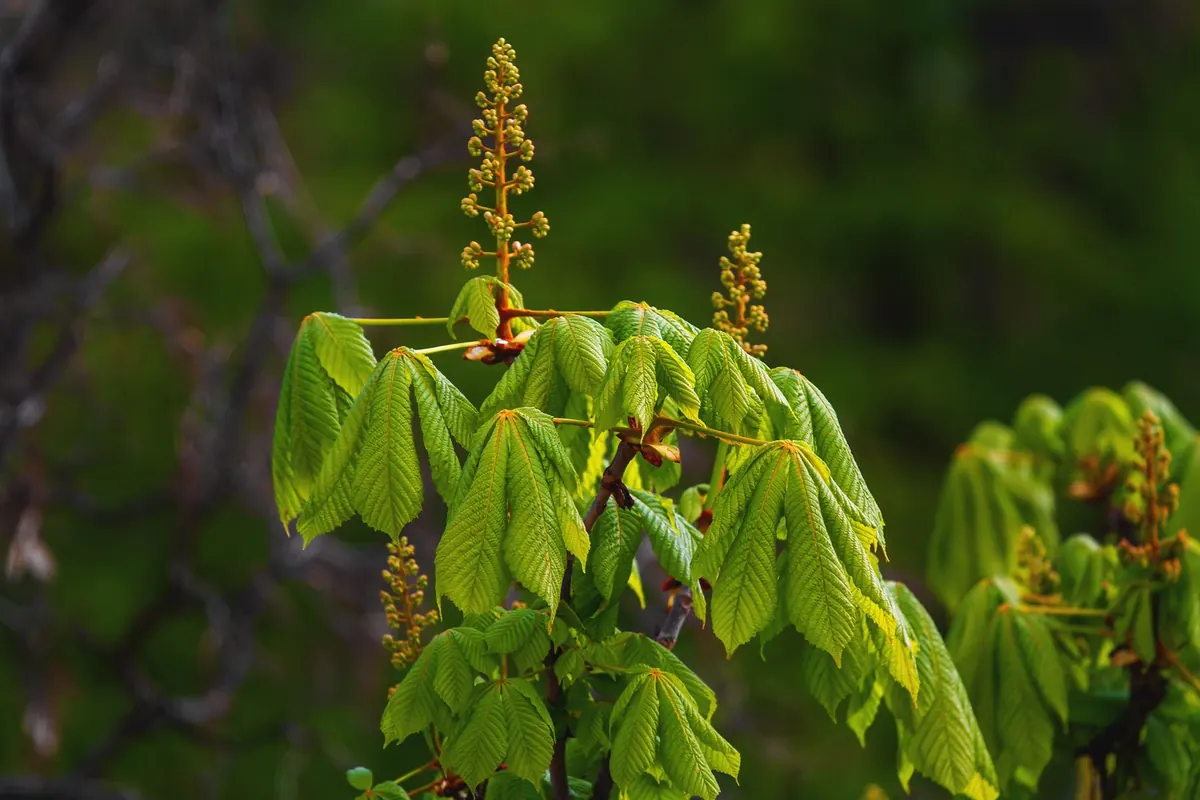
Anyone who has watched a horse chestnut turn crisp and brown in the middle of July knows the feeling. The candles were magnificent in May; by August the tree looks as though it has already lived through autumn, and the conkers arrive small and few. Two problems do most of the damage: the horse chestnut leaf miner and bleeding canker. Neither is usually a death sentence, and a fair amount of the harm can be limited with a rake, a hose and decent timing.
Ten minutes in late May, mid-July and September tells you more than a vague glance from the kitchen window. Walk a full circle. Study the canopy for thinning, discoloured or curling leaves, then run your eyes from the ground up the trunk to the first big limbs. Look for dark streaks, weeping patches, cracked bark, white woolly spots or loose flakes.
Photograph the same two views each time — one looking up into the crown, one of the trunk. Year-on-year comparison beats memory, and if you ever need an arborist, those pictures are useful evidence of how quickly something has changed.
The horse chestnut leaf miner is a tiny moth whose larvae feed inside the leaves. You will not see the moth. You will see its work: pale, serpentine tunnels that widen into brown blotches, usually between the veins. Badly hit leaves dry, curl at the edges and drop early, and the whole tree can look scorched by late summer even in a wet year.
The species reached Britain in 2002 and has since spread through most of the country, so a brown horse chestnut in July is far more likely to be miner damage than disease. A healthy tree generally survives it, but repeated heavy attacks cut growth and conker crops, and a tree that has been stripped of its leaves has less in reserve for drought or a second problem.
The insect overwinters as pupae, mostly in the fallen leaves beneath the tree. That single fact gives you the most effective control available:
If you are considering a chemical treatment on a small tree, remember that approved products and rules vary by country, and that spraying a mature tree safely is a specialist job. Ask a qualified arborist what is permitted where you live before buying anything.
Bleeding canker shows up as dark, sticky liquid oozing from the bark, often low on the trunk or on a major limb. It runs down and dries into a rusty-brown or black crust that looks almost like dried varnish, sometimes with a sour smell. Underneath the stain the bark may be cracked, sunken or dead, and over several seasons the damaged area can spread around the trunk until the crown above it thins and dies back.
In Britain and much of Europe the usual culprit is a bacterium, Pseudomonas syringae pv. aesculi; water moulds in the Phytophthora group can cause similar bleeding on trees in wet, poorly drained ground. There is no spray or injection that cures it. What you can do is slow it down and keep the tree safe:
One small bleed after a hard winter may be nothing more than a frost crack or old damage, so do not reach for the saw immediately. Do, however, keep watching. If more than roughly half the trunk circumference is affected, or the crown is visibly dying back, removal for safety becomes a serious conversation — with a qualified arborist, not a neighbour with a chainsaw.
Leaf blotch causes brown patches with yellow haloes, usually after a wet summer. It is mostly cosmetic; the same autumn raking helps.
Horse chestnut scale appears as white woolly blobs on trunk and branches, often followed by sticky honeydew and sooty mould. It rarely harms a vigorous tree, and spraying usually kills more ladybirds than scale insects.
Squirrels and drought do more long-term damage than most people expect. Grey squirrels strip bark from young trees in summer, and dry, compacted soil quietly kills roots for years before the crown shows it.
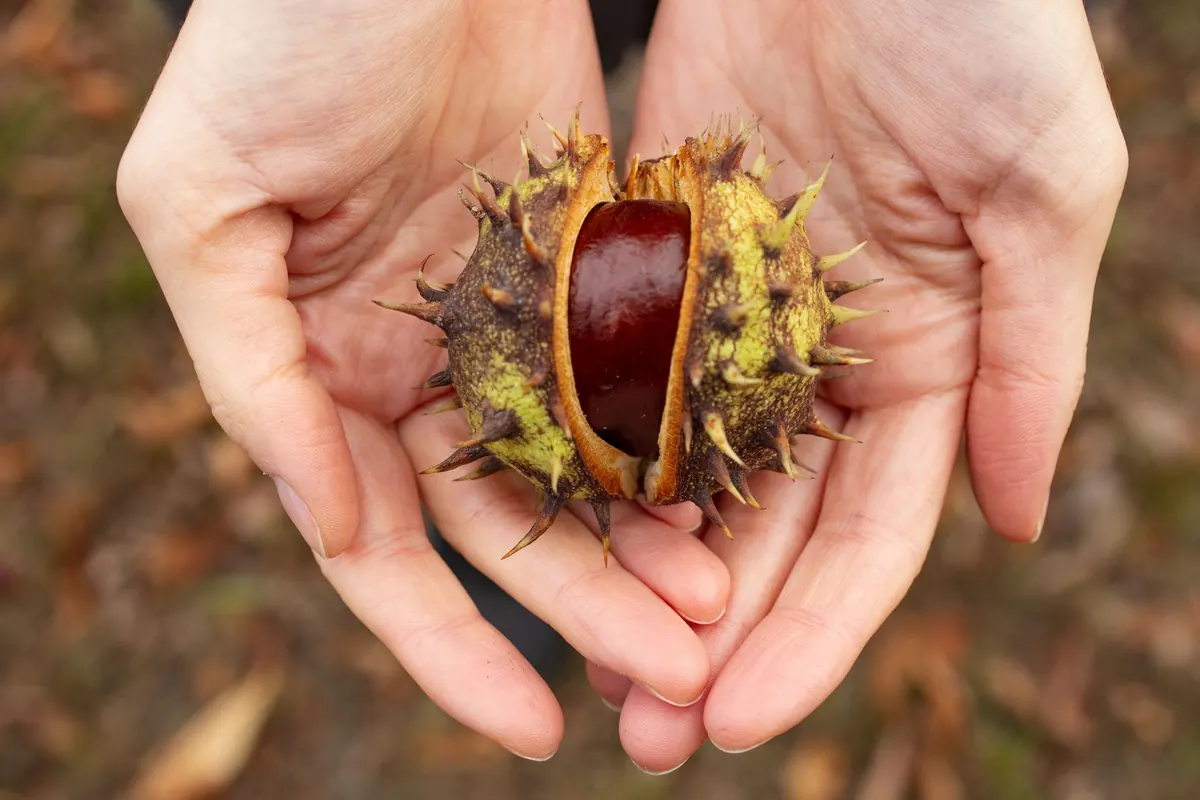
Finally, a safety note: conkers, leaves and bark contain aesculin and are toxic if eaten. Wash hands after handling them, keep them away from pets and small children, and if anything is swallowed, contact a doctor or poisons service straight away.
Give a horse chestnut the conditions it wants and it shrugs off a lot. It likes deep, moist but free-draining soil and room to reach — it is a big tree, so plant it well away from drains, walls and overhead cables. Clear grass and weeds from around the base, mulch to roughly the spread of the branches, and water young trees generously through their first three summers. Avoid digging beneath the canopy; the feeding roots are shallow and close to the surface.
Book a professional inspection if the crown thins noticeably in one season, if bleeding patches multiply or join up, if you see fungal brackets at the base, or if dead limbs hang over a path, road or play area. Ask them to check the tree's structure, not just its diseases, and to put their recommendations in writing. Most horse chestnuts can be kept for many years with patient care — but a leaning tree over a driveway is a different problem from a brown canopy, and it deserves a different answer.
Photo: Сокіл Sokil / Pexels
A record-setting conker at this year's championship has players rethinking grip, stance and strike. Here is how the...
New research on horse chestnut diseases shows how leaf miner, leaf blotch and bleeding canker affect conker size and...
How a bitter, inedible seed from an ornamental tree became the centre of autumn playground life — and how children...

All the conker news, games, and lore..
