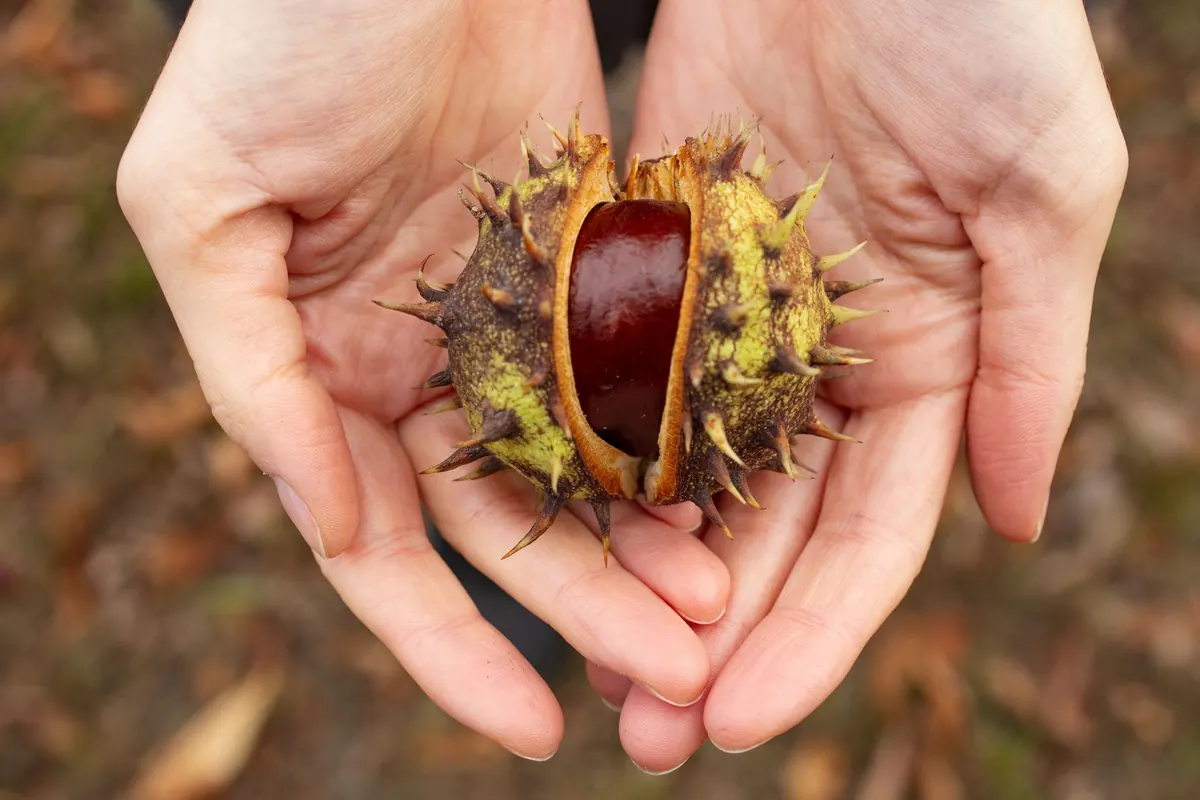
The first good conker of the year is hard to mistake. It drops free of its spiky case, glossy and dark, and by the next morning it is in a coat pocket with a shoelace threaded through the middle. Anyone who has stood in a playground swinging one has joined a game older than the trees it depends on.
Conkers as Britain plays it needed a tree that did not grow here until the seventeenth century. The urge to whack a hard round thing on a string, though, is ancient — and it turns up in almost every part of the world.
Long before anyone thought of a horse chestnut, children played with whatever hard, small objects came to hand. Greek and Roman writers mention games built around nuts and knucklebones: throwing them, catching them, aiming them at a target, and arguing about whose was best. Nuts were cheap, plentiful and satisfyingly solid. They were also, crucially, disposable. Lose one and you found another.
What those games share with conkers is the mechanic rather than the material. Two players, two objects, one strike at a time, and a clear loser when something splits. Medieval and Tudor references to children's play are thin on detail, but hazelnuts, shells and stones all appear as ammunition in seasonal games. The shape of the thing was settled long before the horse chestnut arrived to supply the perfect ammunition.
The horse chestnut is not native to these islands. It comes from a small pocket of the Balkans and spread westwards through the Ottoman Empire, reaching the gardens of western Europe in the sixteenth century. In Britain it is often credited to the plant collector John Tradescant the Elder, who is said to have brought it here in the early 1600s. The tree was grown for ornament: big, generous, spectacular in May when the candles of white flowers come out.
Its nuts, though, were a problem. They are bitter and mildly toxic to people, which rules them out as food, and they are not much use as fodder either — the "horse" in the name is usually explained by that disappointing usefulness rather than anything equine. So the trees were planted along avenues, in parks and in gardens, and every autumn they produced thousands of shiny brown objects that nobody wanted for anything practical.
Children, naturally, worked it out. It took a couple of centuries for the tree to become common enough to supply whole playgrounds, but once it did, the game had found its material.
The word itself is a clue. "Conker" is generally traced to dialect words for a snail shell, from the same root as conch. In several parts of Britain, children threaded snail shells onto string and knocked them together, and the name stuck to the game even after the shells were replaced by nuts.
Hazelnuts were used too, and in some places the game was played with them long after horse chestnuts were available. But the horse chestnut wins on every count that matters to a child: it is bigger, harder, free, and arrives in such quantity that losing one costs nothing.
Written references to the horse-chestnut version appear in the nineteenth century, and by the early twentieth it was a fixture of the school year, somewhere between the start of term and the first frost. Names and rules shifted from county to county, which is why adults still disagree so cheerfully about what counts as a fair hit.
There is no single authorised rulebook. But most versions share the same bones:
New conkers entering a game usually get one free hit against the champion, which is how a battered veteran can fall to a fresh nut on its first day out. That small piece of mercy keeps the game alive for younger players.
Every school had its methods. Soaking in vinegar, baking in the oven, painting with clear nail varnish, burying a conker in the garden until next year, keeping one in a drawer for twelve months. Some work better than others. Slow drying in a cool, dark place genuinely does make a conker denser and tougher; a hot oven usually just makes it brittle and it shatters on the first decent hit. Anyone who has picked up an oven-baked conker knows the smell.
The bigger point is honesty. A conker that has been secretly treated is not a conker, it is a prop, and the whole pleasure of the game is that a beautiful, unpromising-looking nut can beat a shinier one. Conkers teaches losing gracefully, taking turns, and accepting that the other person's luck was simply better that day. Cheating ruins all three at once.
Horse chestnut trees have had a hard few decades. A leaf-mining moth that arrived in Britain in the early 2000s strips the leaves to brown well before autumn, and bleeding canker has killed or weakened many mature trees. The conker crop varies wildly from year to year, and some streets that were once reliably generous now give you almost nothing.
Schools have been inconsistent too. A number banned conkers over the years on safety grounds, worried about knuckles and faces; several later reversed the decision after staff and parents pointed out that the risks are modest and the benefits obvious. A conker championship has been held in Northamptonshire since 1965, drawing competitors from around the world each October and raising money for charity along the way. Meanwhile, plenty of households still tuck a few conkers into corners to ward off spiders — a habit with no real evidence behind it, but no harm either.
Pick conkers that feel heavy for their size and look glossy and unmarked. Reject anything with a soft patch, a hole, or a hairline crack; maggot holes are common and those nuts crumble. Take them home, wipe them clean and let them dry slowly somewhere cool and dark for a few weeks — or, if you have the patience, a full year. Thread them on a strong lace with a firm knot, trim the lace to about six inches, and you are ready.
Play on grass or soft ground, well away from roads and windows, and agree the stamping rule before anyone starts swinging. Check the pitch for other people, especially at eye level. And keep the nuts away from pets and small children: conkers are mildly toxic if eaten and are bad for dogs and horses in particular. If a child or an animal does eat one, get advice from a doctor or a vet rather than waiting to see what happens.
Everything else is luck, weather and the quality of your swing. That has been true for four hundred years, and it is still the best reason to play.
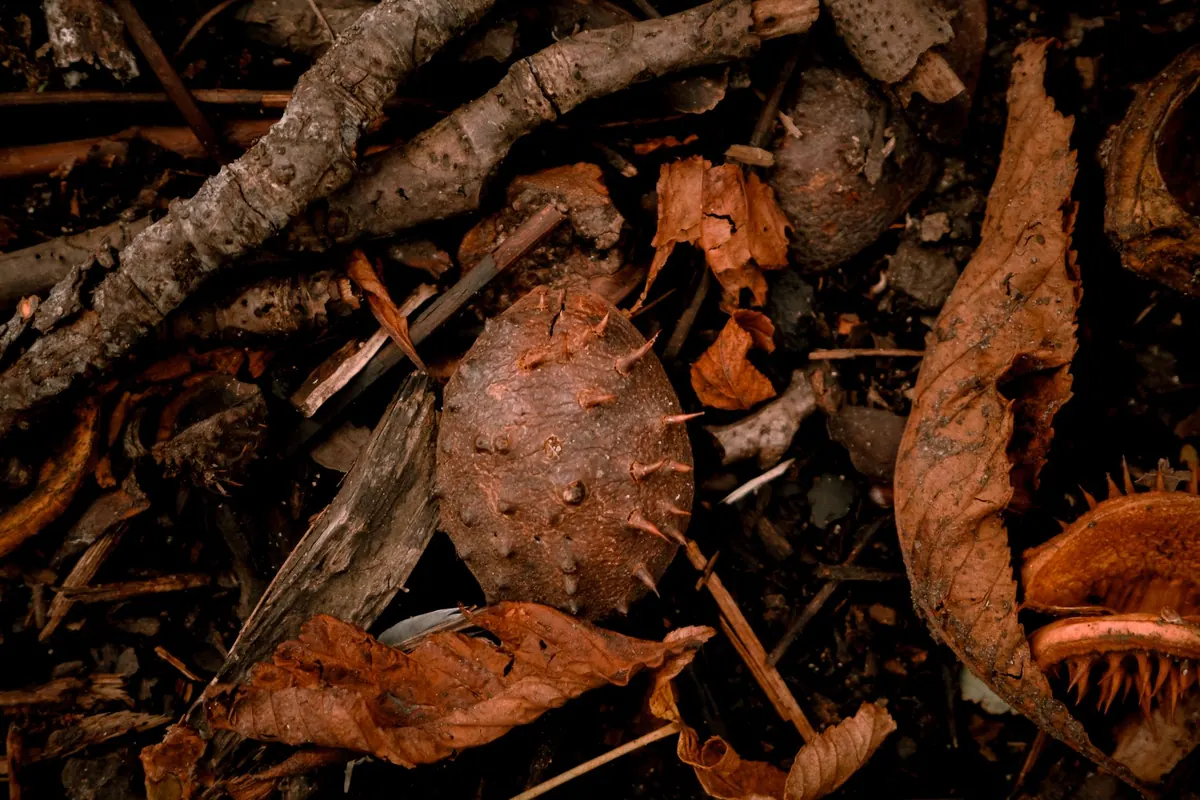
A record-setting conker at this year's championship has players rethinking grip, stance and strike. Here is how the...
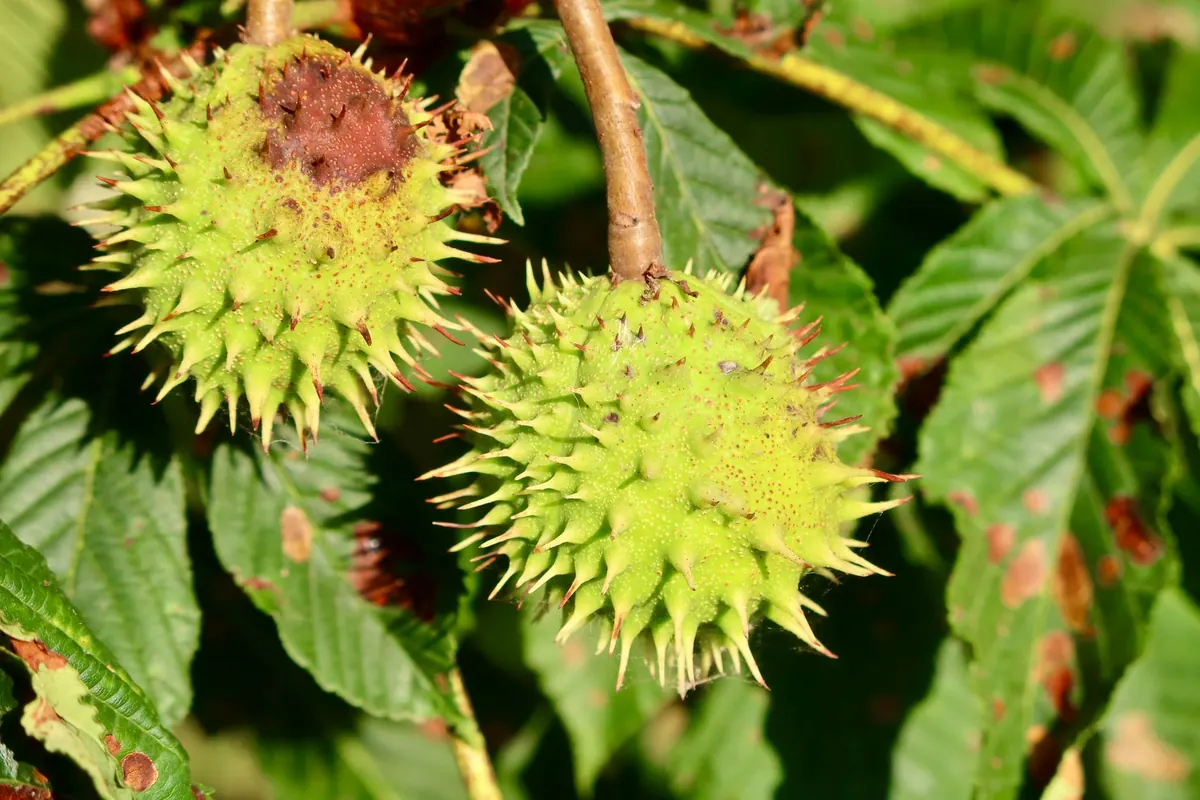
New research on horse chestnut diseases shows how leaf miner, leaf blotch and bleeding canker affect conker size and...
How a bitter, inedible seed from an ornamental tree became the centre of autumn playground life — and how children...

All the conker news, games, and lore..
