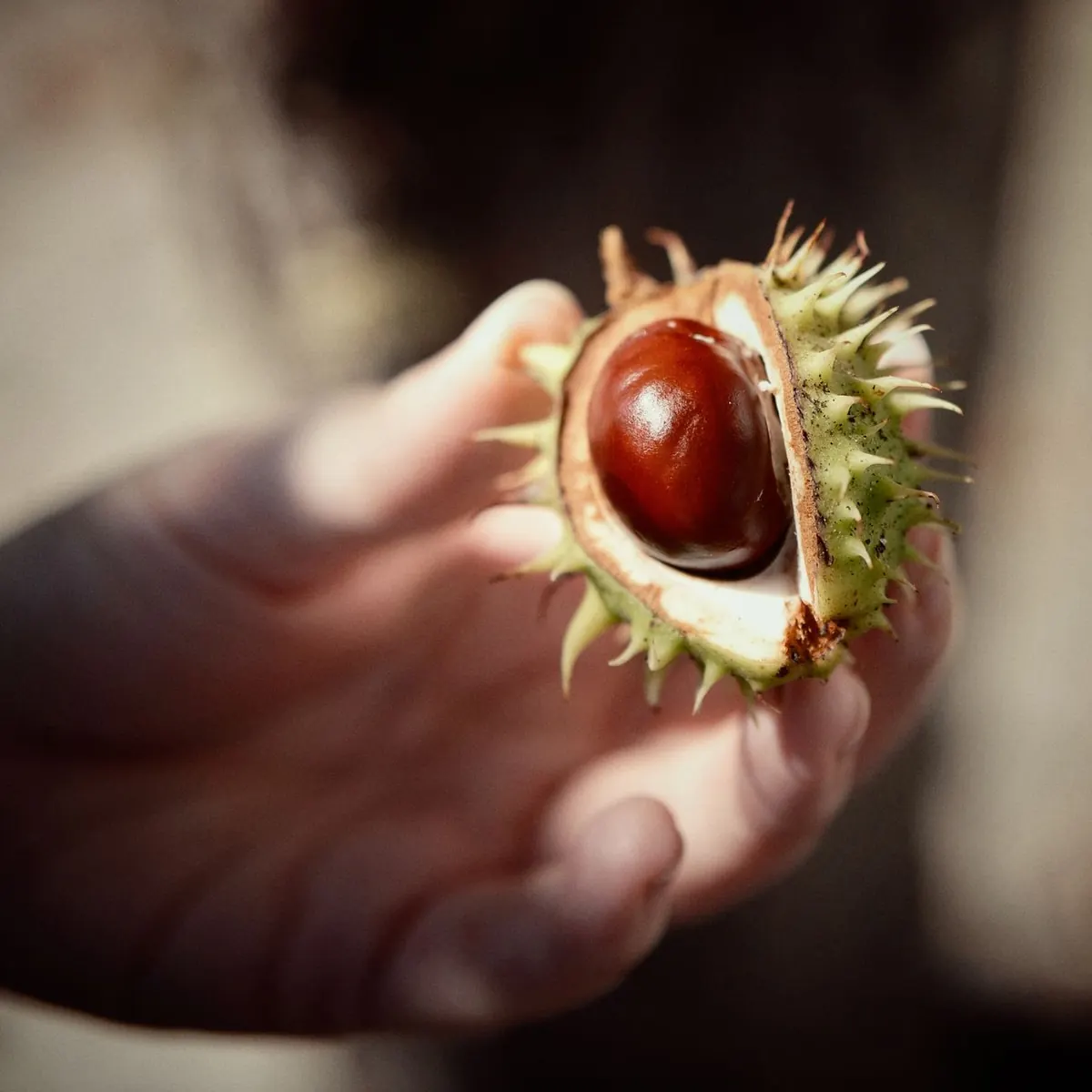
Ask anyone who has lost a conker in the first ten seconds of a match and they will blame the conker. Usually it was the stringing. A hole drilled a fraction too wide, a knot that slips through, a lace that frays on the third swing — these are quiet defeats that happen before anyone takes a swipe. Stringing is a five-minute job, and the mistakes are easy to fix once you know what they look like.
A conker fresh off the tree has a shell with a little give in it. A drill passes through cleanly and the shavings come out as soft, pale fluff. Leave that same conker on a windowsill for a month and the shell turns brittle as an egg. Push a bit into it and the whole thing cracks down the side.
The sweet spot is a day or two after picking. Keep your finds in a paper bag somewhere cool and airy — not a sealed tin, which traps moisture and invites mould — then drill. If a conker has already been sitting around until it feels light and hollow, you can sometimes rescue it by wrapping it in a barely damp paper towel for an hour or two. Do not soak it. A soaked conker swells, softens, and becomes a sponge for mould. Drill slowly with a sharp bit, and if it cracks, accept that it was never a match conker.
Also, don’t drill too soon. A conker picked straight from the spiky casing can be so fresh that the shell is slippery and the flesh inside is soft. The hole may close up or tear, and the string will not sit cleanly. Give it a day or two to firm up. The best conkers feel heavy for their size and have a hard, glossy shell. If it dents under your thumbnail, leave it in the bag.
The string is not an afterthought. It is the only thing connecting your conker to your hand, and it takes more punishment than you think. Thin cotton thread looks neat, but friction from a few hard hits can saw through it. Elastic cord stretches and turns every swing into a bungee jump. A thick, fluffy shoelace may be traditional, but it can be too fat for a small hole and it frays where it rubs against the shell.
The best choices are waxed cotton twine or a thin braided nylon cord. Waxed cotton grips its own knots, so they are less likely to slip. Braided nylon is strong and smooth, but it can be slippery, so tie an extra locking knot and leave a longer tail. If you are using a shoelace because that is what you have, cut it cleanly, trim any frayed ends, and check it after every match. A frayed lace is a countdown to a lost conker.
Avoid anything with stretch, anything rotten, and anything that has already failed you once. A string that has snapped before will snap again, usually at the worst possible moment.
The hole is where most stringing disasters begin. Too wide, and the knot pulls straight through on the first swing. Too narrow, and you force the string, crack the shell, or create a hairline split that opens later. The hole should be just wide enough for your string to pass through without resistance. If you are using a 2mm cord, a 3mm drill bit is usually plenty. If you are using a shoelace, match the bit to the lace, not to the biggest bit in the box.
Off-center holes are just as bad. They leave one side of the conker thinner than the other. That thin side becomes the weak point, and a solid hit will split it open. Drill straight through the middle, using a low speed and a sharp bit. Let the drill do the work. If you push too hard, the shell will crack.
If you have already drilled too wide, do not panic. You can sometimes save the conker by tying a larger knot, adding a second knot, or using a small bead below the knot. Check your competition rules first, because some leagues ban anything that changes the conker’s weight or hardness. If the hole is too small, re-drill with the next size up rather than forcing the string through. A cracked conker is not a conker anymore; it is a pile of pieces.
The knot is the anchor. If it fails, everything else is decoration. A single overhand knot can work loose, especially
Photo: Michael Obstoj / Pexels
A record-setting conker at this year's championship has players rethinking grip, stance and strike. Here is how the...
New research on horse chestnut diseases shows how leaf miner, leaf blotch and bleeding canker affect conker size and...

How a bitter, inedible seed from an ornamental tree became the centre of autumn playground life — and how children...

All the conker news, games, and lore..
